Teacher Takeaway Podcast
  • Home
  • Podcast
    • Live Streams
  • Show Notes
  • Suggestion Box
  • Home
  • Podcast
    • Live Streams
  • Show Notes
  • Suggestion Box

                  Teacher Takeaway


                 Show Notes

S1, EP 27: Classroom Formations

29/11/2021

2 Comments

 
Picture

What information and practices support planning for new class formations?

The formation of classes for a new academic year is a complex process that involves teams of teachers, support staff and school leadership engaging in a range of processes and collegial conversations.  
In episode 27, the Teacher Takeaway team discuss the strategies for forming classes for the new academic school year, including:
  • when do we form classes (1:18)
  • how do we form classes (3:00)
  • teacher preferences (14:50)
  • transitions (32:50)
  • handovers (44:00)

When do we form classes?

Meetings and conversations about class formations for the new academic year generally take place in about week 8 or 9 of Term 4 (depending on your context). It is a process that involves teachers, support staff and school executive engaging in collegial discussions and data analysis to make informed decisions about the development of class groups. 

How do we form classes?

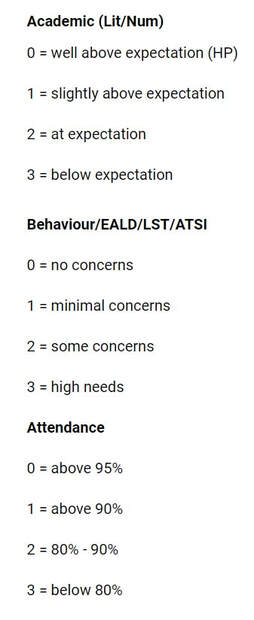
A group of teachers, who have been teaching on the same grade or stage throuout the year, meet together to examie the current class lists and begin the process of coding students based on specific areas, including:
  • literacy skills
  • numeracy skills
  • behaviour
  • attendance
  • learning support
  • high ability
  • EAL/D
  • ATSI
This coding process ensures that when new classes are formed that there is a balance of needs between the classes, so that one teacher's workload is not unfairly and disproportionately higher than another teacher. 

Other things to note during this process are identified clashes between particular students. Asking students prior to the formation process to identify at least 3 other students they think they work well with allows students a voice in the formation process. Alice Vigors highlights that students are aware and informed at te beginning that this isn't necessarily closest friends but people they know they work well with and support their learning. Students are also made aware that they may not get all of their choices but that teachers will endeavour to place them with at least one identified person. 

If you're like Aaron Johnston and work in a collaborative learning space, considerations need to be given to the kind of learning spaces that students will be learning in. 
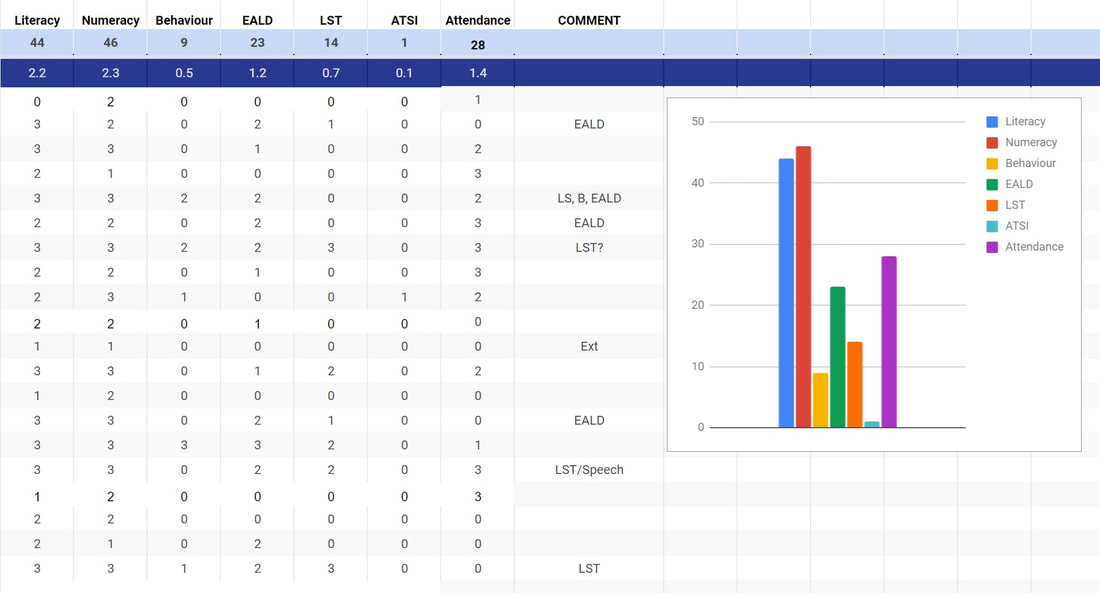
Rebecca West generously shared a snapshot of the digital spreadsheet and coding scale that her staff use collaboratively to form classes.
Picture
Source: Rebecca West
Picture
Source: Rebecca West

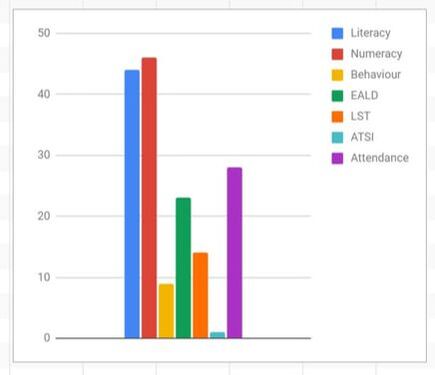
Entering the coded data into a spreadhseet is also a great way to see graphically the needs of the students in particular classes and across classes. 
Making sure that all staff have access to a term/ semester snapshot of data for each student supports the collegial discussion process around coding the academic needs of students. 

Rebecca West states that in her context this data is highlighted red, yellow, green and blue as a visual representation of where students are at, in order to make the coding process easier. The colour representations mean:
  • red - extremely low
  • yellow - just under expectation
  • green - at expectation 
  • blue - achieving above expectation 
Picture
Source: Rebecca West
Parent Requests
Generally any requests from parents in regards to their child and class formations go to the school Principal and are handled accordingly before key pertinent information is passed on to the teaching team during class formation meetings.  

Teacher Preferences

During Term 3 or early Term 4, the Principal and school leadership team send out an expression of interest form to gauge teacher preferences for the new academic year. This form includes information to support the planning process and formation of classes. It may include things such as:
  • work load intentions - full-time, part-time
  • any anticipated leave
  • grade preferences
  • grades taught previoulsly - 5 year period 
  • interest in leadership opportunities
  • areas of interest - KLAs or Extra-curricular 

At times, there may be instances when the leadership team need to decide on which teachers will be on particular grades and/or classes, such as high staff turnover. 

Transitions

Depending on your  context students may or may not experience a transition program. In some school systems students don't find out their class teacher and class mates due to fluctuating numbers and policy practices to ensure numbers or "bums on seats" as the Teacher Takeaway team put it.

In other school systems this might be a short session where the students are put in to their new class groups and meet their teacher. These sessions are an opportunity for students to become familiar with the formation for the following year. It is also an opportunity for students who require additional support to transition and begin to build relationships with their new teacher and class mates. 

Handovers

Handover meetings between current and new teachers, support teachers and executive are a great opportunity for the teachers of a new cohort to gather crucial information about the students, including:
  • Literacy ability
  • Numeracy ability
  • Behaviour concerns and any behaviour plans (if applicable)
  • Attendance rates or concerns 
  • Learning support needs and learning support plans (if applicable) - additional support or extension
  • Personalised Learning plans (PLP) for ATSI students - goals that were or weren't met
  • EAL/D plans 
  • Family history
  • Friendship issues
This meeting is an opportunity to handover important data overviews, key student work samples and provide any other verbal information the new teacher will need to know about that student in the new school year. It is a beneficial process that supports the early planning stages for a new class. 
2 Comments
Natalie
30/11/2021 04:04:35 pm

Hi there
Is it possible for Bec to please share her class sorting spreadsheet please?

Thanks

Reply
Alice Vigors
30/11/2021 04:58:08 pm

Hi Natalie,
we are working on making a blank template that people will be able to access and make a copy of. Check back soon.
Regards,
Alice
Teacher Takeaway Podcast co-host

Reply

Your comment will be posted after it is approved.


Leave a Reply.

    Authors

    The Teacher Takeaway Podcast is hosted by four Australian teachers and school leaders. With a wealth of industry knowledge and expertise, Aaron Johnston, Alice Vigors, Rebecca West and James Gray bring all the elements of effective pedagogical practice to the fore in a light-hearted way. These show notes are a summary of each episodes discussion with some added gems for you to takeaway. Happy reading everyone.

    Archives

    April 2023
    March 2023
    February 2023
    January 2023
    December 2022
    November 2022
    October 2022
    September 2022
    August 2022
    July 2022
    June 2022
    May 2022
    April 2022
    March 2022
    February 2022
    January 2022
    December 2021
    November 2021
    October 2021
    September 2021

    Categories

    All
    Aboriginal & Torres Strait Islander Perspectives
    Assessment
    Beginning Of The Year
    Behaviour Management
    Book Week
    Casual Teaching
    Class Formation
    Classroom Environment
    Cognitive Load Theory
    Collaboration
    Collective Efficacy
    Co-teaching
    Creative Arts
    Cyber Safety
    Data
    Differentiation
    Early Career Teachers
    End Of Year Processes
    Expectations
    Explicit Teaching
    Expressions Of Interest (EOIs)
    Feedback
    Flexible Learning
    Flexible Seating
    Handover
    Highly Accomplished & Lead Accreditation
    High Potential And Gifted Education
    I Do We Do You Do
    Inquiry Learning
    Instructional Leader
    Job Applications
    Job Interviews
    Language Comprehension
    Leadership
    Learning Intentions
    Learning Walls
    Literacy
    New Teacher Advice
    Parent Interviews
    Parents And Carers
    Planning & Programming
    Podcast Celebration
    Podcast Guest
    Professional Learning
    Reconciliation
    Reflection On Practice
    Remote Learning
    Remote Teaching
    Reports
    Returning To School
    Routines
    School Culture
    Science
    Science Of Learning
    Science Of Maths
    Season 1
    Season 2
    Season 3
    SLSO
    Student Agency
    Student Voice
    Success Criteria
    Summer Holidays
    Support Roles
    Teacher Librarian
    Teacher Movies
    Teacher Preferences
    Teacher Takeaway Podcast
    Teacher Workforce Roundtable
    Teaching And Learning Cycle
    The Thinking Classroom
    Top 100 Podcasts
    Transition
    Wellbeing
    What Works Best

    RSS Feed

Powered by Create your own unique website with customizable templates.